
Growing up in a Christian household, I was immersed in the belief that Christianity was the one true religion. I was taught that the Bible was divinely inspired and that God had made His truth clear to humanity. But as I got older, I began to notice something strange—there wasn’t just one version of Christianity. There were thousands.
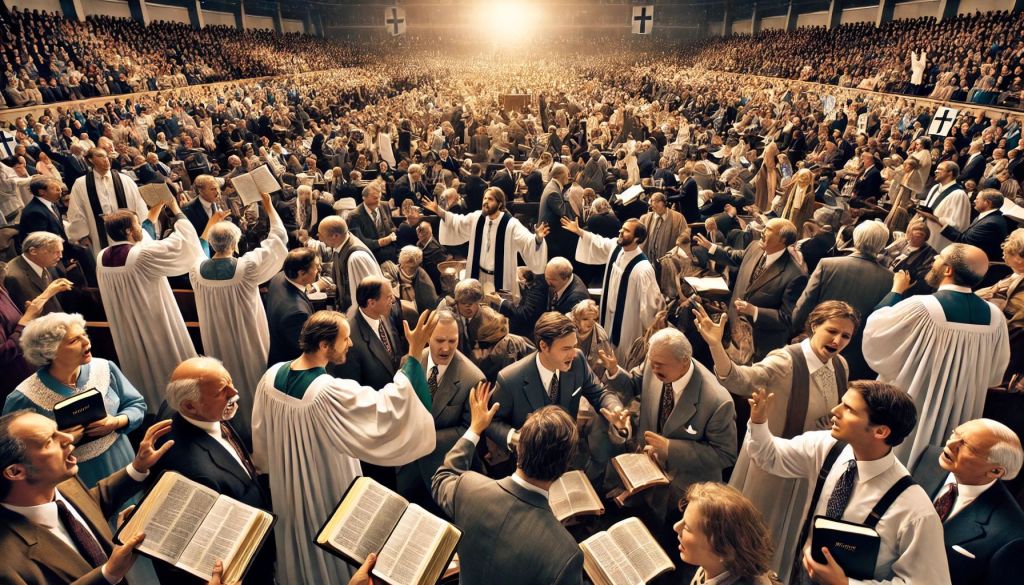
Christianity’s Endless Divisions
Today, there are over 40,000 Christian denominations worldwide, each with its own interpretations, doctrines, and traditions. Some believe in infant baptism, while others insist it’s only for adults. Some teach that salvation is by faith alone, while others claim works are required. Some accept LGBTQ+ individuals, while others condemn them. Some see Jesus as equal to God, while others argue He is subordinate.
These aren’t minor disagreements—they’re fundamental contradictions. And yet, every one of these denominations claims to follow the same book, the same God, and the same “absolute truth.”
A Religion of Divine Truth Wouldn’t Be This Confused
If Christianity were truly divinely inspired, why is it so fractured? Why would a perfect, all-knowing God allow His supposed message to become so distorted that millions of believers can’t even agree on what it says?
The existence of so many competing and contradictory denominations is strong evidence that Christianity is not the divinely guided, God-ordained truth it claims to be. Instead, it looks exactly like what we would expect from a man-made religion—one that has evolved, splintered, and been shaped by human opinions, culture, and power struggles over the centuries.
Even the Bible itself is subject to endless interpretation, with believers cherry-picking verses to support their own ideas while ignoring or explaining away the contradictions. If God truly wanted to deliver a clear, unified message, He failed spectacularly—or, more likely, the message was never divine to begin with.
Think About It
If Christianity were the one true religion, shouldn’t its followers agree on what its core teachings mean? Instead, we see thousands of versions of Christianity, each claiming to be the correct one. The reality is that people shape religion—not the other way around.
This realization was one of the most difficult but freeing moments in my journey. When I finally accepted that Christianity was not the unquestionable truth I had been raised to believe, I was able to step back and see it for what it really is: a human-made system, not divine revelation.
I encourage anyone reading this to think critically about what this division really says about Christianity. Is this what we would expect from a perfect God? Or is it exactly what we would expect from human beings creating religions to fit their own needs and beliefs?
 Logical Exodus