
Imagine you’re an ancient Egyptian scribe, carefully recording the reign of Pharaoh Pepi II. You document trade, taxes, and daily life—completely unaware that, according to the Bible, your civilization should have been wiped off the face of the earth by a global flood.

Now, picture a Chinese oracle bone scribe carving symbols into turtle shells, preserving the traditions of a people who—again, according to the Bible—shouldn’t exist because every living thing was supposedly drowned.
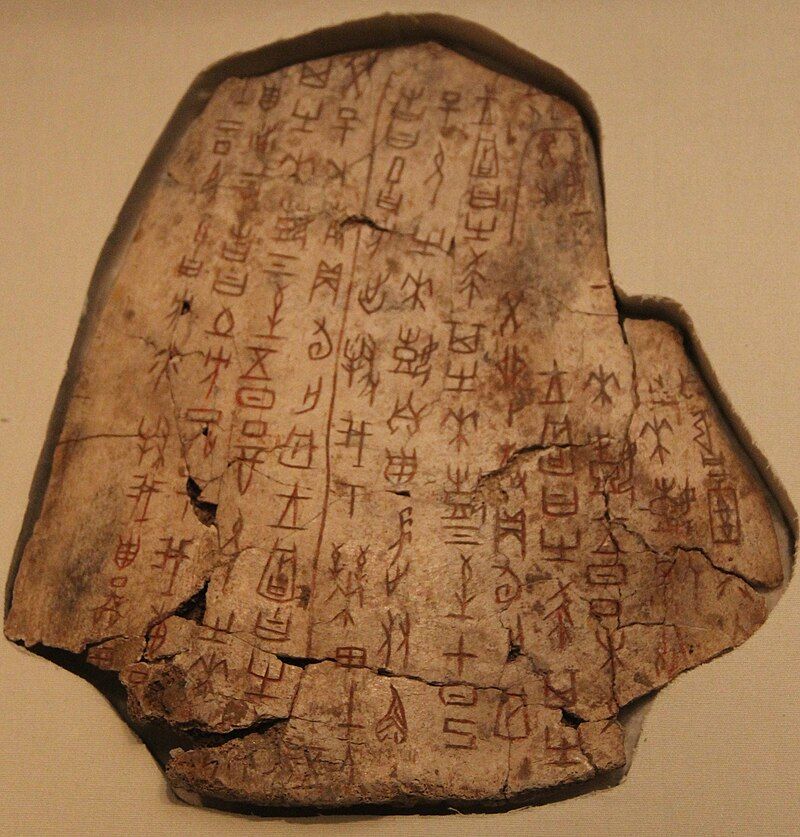
See the problem? . .
The Bible claims in Genesis 7:22 that “everything on dry land that had the breath of life in its nostrils died.” That means no survivors except Noah’s family. But history tells a very different story.

Egypt and China Never Hit Reset
If the flood happened around 2300 BCE, as many biblical literalists claim, we should see a massive gap in human history—a complete reset where civilizations had to start over. But we don’t.
1. Egypt’s History Rolls On
The 6th Dynasty (c. 2345–2181 BCE) was thriving, with pharaohs ruling, pyramids standing, and society functioning as usual. There are no records of a devastating flood wiping them out.
2. China’s Civilization Stays Strong
The Xia Dynasty (c. 2070–1600 BCE) and earlier cultures left behind written records, artifacts, and structures that show a continuous civilization—no worldwide catastrophe, no sudden population bottleneck.
These aren’t just myths or interpretations. These are verifiable, historical records.
So, What Does This Mean?
If a worldwide flood had actually happened, these civilizations should have been gone. Their records should have stopped. Their people should have disappeared. But they didn’t.
So, we have to ask: Is the Bible’s flood story history? Or is it just that—a story?
History challenges us to think critically, even when it’s uncomfortable. The evidence is right in front of us. The question is, are we willing to see it?
What do you think? Let’s talk about it in the comments.
Sources
Clayton, P. A. (2006). Chronicle of the Pharaohs: The Reign-by-Reign Record of the Rulers and Dynasties of Ancient Egypt. Thames & Hudson.
Dodson, A., & Hilton, D. (2004). The Complete Royal Families of Ancient Egypt. Thames & Hudson.
Shaw, I. (2003). The Oxford History of Ancient Egypt. Oxford University Press.
Books on Ancient Chinese Civilization
Chang, K. (1986). The Archaeology of Ancient China. Yale University Press.
Keightley, D. N. (1983). The Origins of Chinese Civilization. University of California Press.
Loewe, M., & Shaughnessy, E. L. (Eds.). (1999). The Cambridge History of Ancient China: From the Origins of Civilization to 221 B.C. Cambridge University Press.
Biblical Chronology and the Flood Narrative
Faulstich, E. (2003). History, Harmony & the Hebrew Kings. Chronology Books.
Whitcomb, J. C., & Morris, H. M. (1961). The Genesis Flood: The Biblical Record and Its Scientific Implications. Presbyterian & Reformed Publishing. (Creationist source for context on their flood timeline.)
Archaeological and Historical Analysis of the Flood Story
Atran, S. (2002). In Gods We Trust: The Evolutionary Landscape of Religion. Oxford University Press.
Finkel, I. (2014). The Ark Before Noah: Decoding the Story of the Flood. Hodder & Stoughton.
 Logical Exodus