
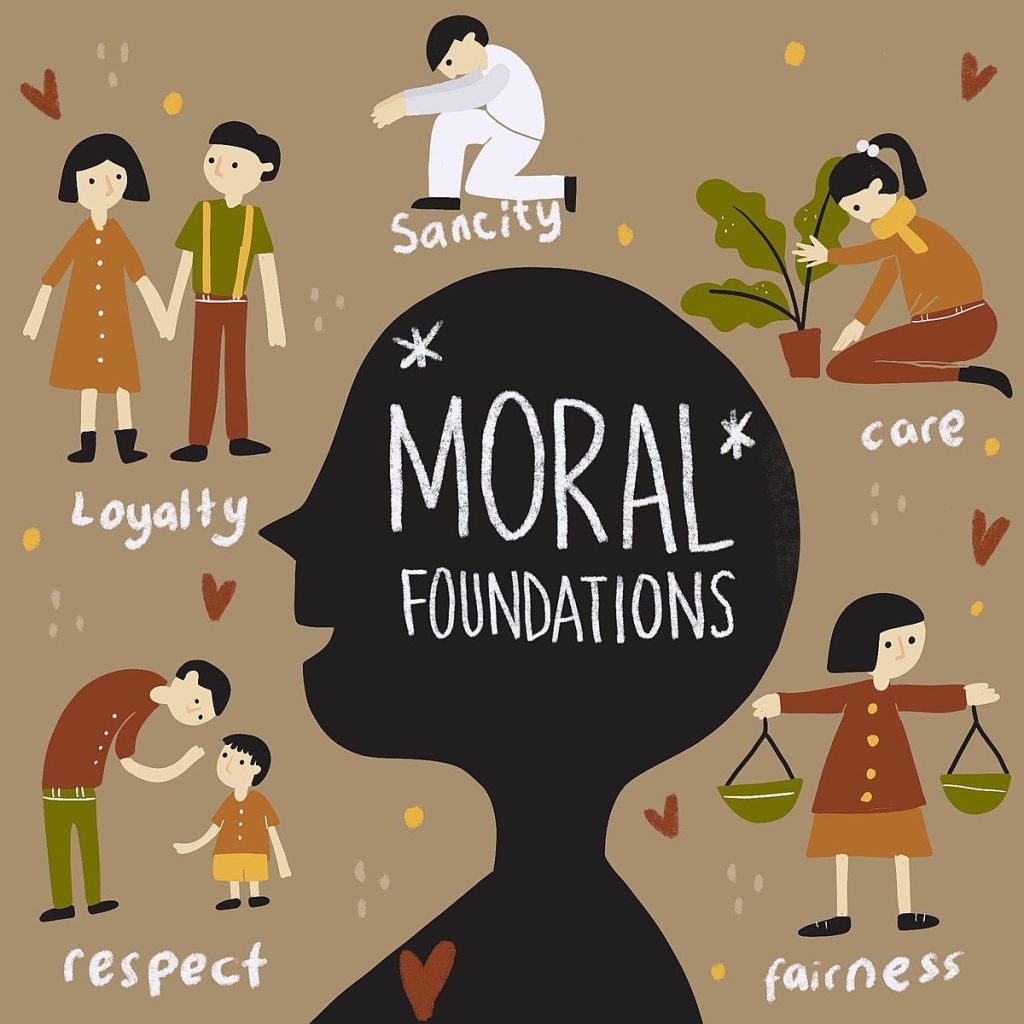
Have you ever stopped to ask yourself why you believe something is right or wrong? If your only answer is, “Because God said so,” then what you have isn’t morality—it’s obedience.
I know that might sound harsh, but hear me out. True morality isn’t about following orders; it’s about understanding why something is good or bad based on its impact on others. Blind obedience, on the other hand, requires no thought—just submission. And history has shown us why that’s dangerous.
Obedience vs. Moral Reasoning: What Psychology Tells Us
Psychologists have studied how people justify their actions, and the results are eye-opening. One of the most famous studies on obedience, the Milgram Experiment (Milgram, 1963), showed that people were willing to harm others simply because an authority figure told them to. Many participants felt uneasy about what they were doing, but instead of questioning whether it was morally right, they followed orders anyway.
Now, apply this to religion. If someone believes that goodness is defined solely by obedience to God, what happens when they’re told to do something harmful? History gives us plenty of examples—crusades, witch trials, honor killings—all justified because people believed they were following divine commands.
True Morality Comes From Empathy and Reason
When we remove “God told me so” from the equation, we’re left with a more meaningful way to determine right from wrong. Research in moral psychology suggests that morality is deeply connected to empathy and social cooperation—not divine command.
For example:
Studies on infants (Bloom, 2013) show that babies as young as six months old prefer kind behaviors over harmful ones, long before they can understand religious concepts. This suggests that morality is innate, not something exclusively taught through religion.
Research on secular societies (Norenzayan, 2013; Zuckerman, 2008) shows that people in non-religious communities are just as, if not more, ethical in their treatment of others compared to religious societies. Countries like Sweden and Denmark, which have low levels of religious belief, consistently rank high in measures of well-being, trust, and fairness.
This tells us something important: Morality exists independent of religious belief.
How to Think Critically About Morality
If you’ve always tied morality to religious obedience, it can feel unsettling to question it. But questioning doesn’t mean abandoning morality—it means strengthening it. Here are some ways to think critically about what you believe:
1. Ask “Why?” More Often – If you believe something is wrong, don’t stop at “because God said so.” Ask: Does this harm others? Does it promote fairness and well-being?
2. Consider Moral Dilemmas – If morality is just about following rules, why do we struggle with difficult choices? Thinking through real-world ethical dilemmas (e.g., lying to protect someone) helps us see that morality is more nuanced.
3. Look at the Evidence – Studies on human behavior, psychology, and history show us how morality functions in different societies. Explore these perspectives instead of relying solely on religious teachings.
Final Thoughts
Real morality isn’t about fear of punishment or the promise of reward—it’s about choosing to do what’s right because it matters. If your goodness depends entirely on a command, what happens when the command changes? But if your goodness is rooted in reason, empathy, and understanding, no external force can take it away.
So, I’ll leave you with this question: If you had never been told what was right or wrong, how would you decide?
Let’s discuss!
Sources Cited:
Bloom, P. (2013). Just Babies: The Origins of Good and Evil. Crown Publishers.
Milgram, S. (1963). Behavioral Study of Obedience. Journal of Abnormal and Social Psychology, 67(4), 371–378. https://doi.org/10.1037/h0040525
Norenzayan, A. (2013). Big Gods: How Religion Transformed Cooperation and Conflict. Princeton University Press.
Zuckerman, P. (2008). Society Without God: What the Least Religious Nations Can Tell Us About Contentment. New York University Press.
 Logical Exodus